
Arthur Is Coming: Why We Give Human Names to Storms
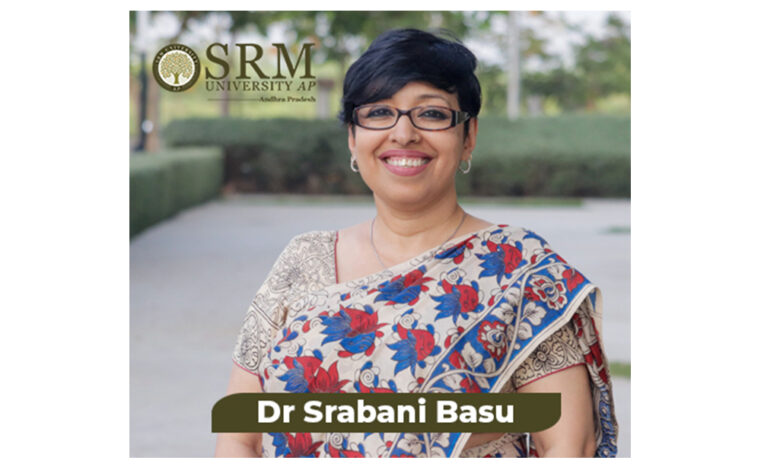
By – Dr Srabani Basu
Associate Professor, Department of Literature and Languages, SRM University AP, Amaravati.


Somewhere over an ocean, several billion tonnes of water vapour begin conspiring. The air pressure falls. Winds gather speed. Clouds arrange themselves into an enormous spiral visible from space. Satellites stare. Meteorologists calculate. Governments prepare. Fishermen are warned. And then, at the end of all this formidable science, somebody announces that the approaching atmospheric monster is called Arthur.
Arthur?
One somehow expects a force capable of tearing roofs off houses to arrive with a name like The Devourer of Continents. Instead, Arthur is coming. Or Bertha. Or Dolly. Somewhere else it might be Dana, Gulab, Biparjoy, Remal or Shakhti. Nature produces one of the most powerful thermodynamic systems on Earth; human beings give it something that could comfortably appear on a birthday cake.
Why?
The answer has far less to do with poetry than with communication. Yet the story of how storms acquired names is wonderfully human, because it reveals one of our oldest habits: when something enormous, unpredictable and frightening enters our world, we try to make it linguistically manageable.
For centuries, storms had no orderly naming system at all. Some became associated with places, events or dates. In the Caribbean, hurricanes were sometimes remembered by the saint’s day on which they occurred. The U.S. National Hurricane Center records, for instance, Hurricane Santa Ana, which struck Puerto Rico on 26 July 1825, and two storms known as San Felipe, both of which struck Puerto Rico on 13 September—one in 1876 and another in 1928.
Already we can see the problem. Imagine trying to discuss San Felipe while somebody asks, “Which San Felipe?”
Meteorology eventually became more systematic, and storms could be identified through latitude and longitude. Scientifically impeccable. Conversationally dreadful.
Try telling a coastal population that 18.6° N, 86.7° W is rapidly intensifying while another system at 13.2° N, 48.9° W is moving west-northwest. Now imagine communicating several such systems between ships, weather stations, military bases, newspapers and emergency agencies. One transposed digit and the storm has apparently wandered off somewhere it has absolutely no intention of going.
The World Meteorological Organization explains that short, distinctive names proved faster to transmit, easier to remember and less vulnerable to communication errors than cumbersome geographical coordinates. Names become especially useful when several tropical cyclones exist simultaneously.
So, Arthur is not called Arthur because he looks like an Arthur.
Arthur is called Arthur because humans remember Arthur much more easily than a string of coordinates.
But before Arthur came the ladies.
One of the most colourful figures in the history of cyclone naming was the wonderfully named Clement Lindley Wragge, an eccentric nineteenth-century meteorologist who worked in Australia. NOAA identifies Wragge as the first known meteorologist to assign names systematically to tropical cyclones. He experimented with Greek letters and names from mythology and eventually used women’s names.
Then literature entered the weather office.
In 1941, American writer George R. Stewart published Storm, a novel in which a junior meteorologist privately names a Pacific storm Maria. The idea of personifying a storm was therefore already circulating culturally before modern naming conventions became established. During the Second World War, the practice of using women’s names became widespread among American military meteorologists tracking storms across the Pacific. NOAA records that Army Air Force forecasters on Saipan began naming typhoons after wives and girlfriends in 1944.
There is something almost unbearably human about that. Thousands of kilometres from home, staring at weather maps in the middle of a war, men attached familiar names to enormous distant storms.
Romantic? Perhaps.
A little unfair to the wives and girlfriends? Definitely.
Imagine discovering that your beloved has commemorated you not with a sonnet but with a meteorological event capable of flattening Guam.
The United States briefly tried a more military-sounding system using the phonetic alphabet- Able, Baker, Charlie and so forth. But changes to the international phonetic alphabet created confusion, and in 1953 U.S. weather services formally began using lists of women’s names for Atlantic tropical storms.
And there the matter might have remained had somebody not noticed the rather obvious implication.
Why, exactly, were all destructive storms female?
By the 1970s the convention was increasingly criticised as sexist. In 1978 male and female names began appearing together on Eastern North Pacific lists, and from 1979 Atlantic lists alternated male and female names. NOAA notes that the change followed pressure to abandon the women-only convention.
At last, equality arrived.
Men too could destroy entire coastlines.
But here comes an important distinction. We often say that storms are “named after people.” Under today’s international system, that is misleading. The World Meteorological Organization explicitly states that tropical cyclones are not named after particular individuals. Regional meteorological bodies prepare lists in advance, with member countries proposing suitable names. The objective is not to honour Arthur, Bertha, Shakhti or Dana. The objective is to create names that communities can recognise, pronounce, remember and communicate quickly.
And the world does not follow one universal naming pattern.
The Atlantic uses predetermined lists containing male and female names. Six lists rotate, normally returning every six years. Certain letters, Q, U, X, Y and Z, are omitted because finding enough instantly recognisable names beginning with them across the relevant languages is difficult. The Atlantic lists also balance English, French and Spanish names because hurricanes do not respect linguistic borders any more than geographical ones.
The North Indian Ocean tells a different and, to my mind, much more fascinating story.
Cyclones over the Bay of Bengal and Arabian Sea are named through the WMO/ESCAP Panel on Tropical Cyclones. In 2020, a new list containing 169 names was adopted: thirteen names contributed by each of thirteen member countries—Bangladesh, India, Iran, Maldives, Myanmar, Oman, Pakistan, Qatar, Saudi Arabia, Sri Lanka, Thailand, the United Arab Emirates and Yemen. India’s contributions include names such as Gati, Tej, Murasu and Aag, while other countries contributed names including Biparjoy, Michaung, Remal, Asani and Dana and the most recent Arnab.
Here the storm becomes almost a travelling piece of language. One cyclone may carry a Bangladeshi name across Indian waters; another an Omani name; another a Sri Lankan one. The atmosphere, utterly indifferent to passports, becomes labelled through an extraordinary exercise in international cooperation.
Names must also satisfy practical requirements. According to WMO guidance, they should generally be short, easy to pronounce, meaningful or appropriate across relevant languages and sufficiently distinctive for communication.
There is another curious fate awaiting a storm name.Some names become too terrible to use again.
In the Atlantic, names normally return every six years, but exceptionally destructive or deadly storms can have their names permanently retired. Katrina will not casually reappear as another hurricane. Nor will Beryl, Helene or Milton: the World Meteorological Organization retired those three Atlantic names in 2025 because of the destruction associated with the 2024 storms. They were replaced by Brianna, Holly and Miguel.
This is where naming ceases to be merely administrative and enters cultural memory.
A name that once belonged to an ordinary list becomes inseparable from photographs, evacuation orders, ruined homes and human loss. Language acquires weather. Ask people who lived through a catastrophic cyclone or hurricane about its name years later and they may not hear a name at all. They hear wind.
That psychological dimension explains why naming works so effectively. Human cognition prefers identifiable units to abstract streams of information. A named storm becomes a single object of attention. News reports can follow it. Families can discuss it. Governments can issue warnings about it. People can search for it. “Cyclone Remal is approaching” carries an immediacy that “Severe Cyclonic Storm 02B” simply does not possess.
WMO therefore describes naming as part of disaster-risk communication: it improves public awareness, helps distinguish simultaneous storms and supports preparedness.
And perhaps there is something deeper here too.Human beings have always named what overwhelms them.
We named oceans although the oceans never asked us to. We named mountains that existed millions of years before language. We named constellations by drawing imaginary hunters, bears and scorpions between stars separated by inconceivable distances. We named death. We named love. We named gods. We even named infinity.
Naming does not give us control over these things. It gives us a way of standing before them.
Shakespeare’s Juliet famously wondered, “What’s in a name?” Quite a lot, apparently, when the name is rotating at 150 kilometres an hour.
The storm itself knows nothing of this. Somewhere above a warm ocean, air rises, pressure falls, water condenses, Earth’s rotation bends the winds, and an immense engine begins to turn. It has no knowledge that thirteen nations sat around tables deciding what humans should call it. It does not know whether it is Arthur, Dana, Shakhti or Miguel.
We know.And perhaps that is the point.A storm is physics.A named storm becomes a story.And human beings, faced with something too large to hold in their hands, have always found another way of holding it.
We hold it in language.