
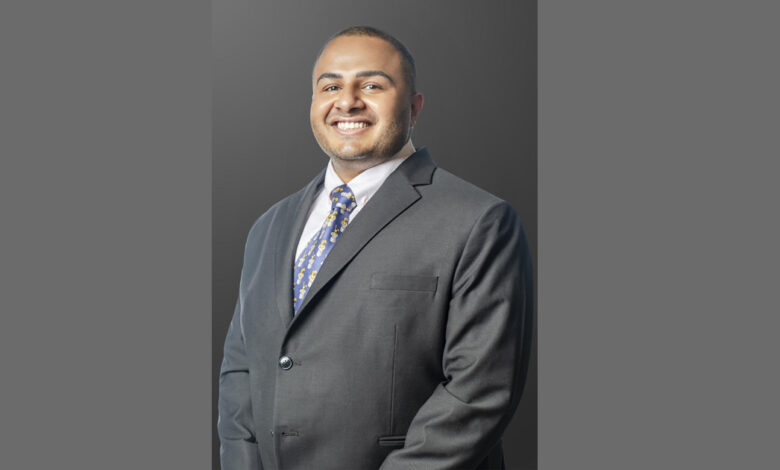
From Personal Capital to Cross-Border Advisory: Aditya Earnest John on Building HowToDXB into a Structured Wealth Bridge Between India and Dubai
In an exclusive interaction with The Telegraph News, Aditya Earnest John, Founder of HowToDXB Real Estate, reflects on how 13 years of personal investing experience shaped his decision to formalise a platform dedicated to Indian investors navigating Dubai’s property market. What began as a personal quest to hedge against rupee depreciation in a dollar-pegged economy evolved into a research-driven, compliance-led advisory model addressing the complexities of FEMA regulations, taxation, remittance structuring, and on-ground asset selection.
John discusses the growing sophistication of Indian investors, the strategic appeal of Dubai as a long-term wealth base under the Dubai 2040 Urban Master Plan, and the importance of integrating regulatory clarity with granular market intelligence. As HowToDXB scales its presence across global corridors, he outlines how institutionalising trust through structured processes and governance frameworks remains central to building a sustainable cross-border advisory platform.


1. After 13 years of investing personally, what defining moment pushed you to formalise HowToDXB?
Ans. After investing personally for over 13 years, the defining trigger was recognising a market gap I had experienced firsthand.
As an Indian investor, I wasn’t simply purchasing property — I was pursuing a broader financial objective: hedging against rupee depreciation by allocating capital into a dollar-pegged economy. However, the journey proved far more complex than expected.
Identifying the right asset was only the beginning. This was followed by navigating legal fund remittance, FEMA regulations, tax structuring, and compliance considerations. Even post-acquisition, new challenges emerged — renting, remote tenant management, operational oversight, and planning an exit strategy.
What became evident was that many Indian HNIs faced the same friction. They had both capital and intent but lacked structured, end-to-end advisory support.
HowToDXB emerged from that realisation. The goal was not merely to facilitate transactions, but to remove friction across the entire cross-border investment lifecycle — transforming lived experience into a research-driven, compliance-led advisory platform.
2. Why do Indian investors need dual expertise across FEMA, taxation, and Dubai market insights?
Ans. Cross-border investing sits at the intersection of regulation, taxation, currency strategy, and asset selection — an area where investors often underestimate complexity.
Dubai-based agents typically possess strong local market expertise but may not fully account for Indian taxation and FEMA obligations, which continue to apply regardless of where the asset is located. Without proper structuring, investors can unintentionally create compliance risks.
Conversely, India-based advisors may understand domestic taxation but lack deep, on-ground Dubai market knowledge. Dubai is not a uniform market — selecting between two waterfront communities or identifying the right villa neighbourhood requires granular local insight. Without that, advice can drift into product pushing rather than strategic analysis.
Investors benefit most from advisors who integrate regulatory clarity, tax efficiency, and market intelligence under one platform, improving decision quality while reducing friction.
3. How has the Indian Dubai property buyer evolved over the last decade?
Ans. The Indian Dubai property buyer profile has broadened significantly — both demographically and geographically.
Earlier, Dubai primarily attracted ultra-high-net-worth Indian families, often second- or third-generation business owners from Tier-1 cities with global exposure.
Today, the base has expanded to include affluent entrepreneurs and business families from Tier-2 cities who have created substantial wealth through regional industries, manufacturing, trading, and land appreciation. They are aspirational, globally aware, and increasingly sophisticated in their investment approach.
Additionally, the buyer mix now includes senior professionals — bankers, lawyers, Chartered Accountants, corporate executives, and startup founders — who adopt a data-driven lens focused on yields, currency stability, and portfolio diversification.
Dubai is no longer viewed as a niche destination for ultra-HNIs, but as a strategic wealth hub for globally minded Indian investors.
4. What makes Dubai a stronger long-term wealth base?
Ans. A useful way to evaluate Dubai is to view it like a fundamentally strong asset class.
At the macro level, Dubai offers structural advantages that are difficult to replicate: exceptional safety, a tax-efficient environment, and a compelling lifestyle proposition. Safety directly supports capital preservation and residency confidence, while tax efficiency enhances wealth retention.
At the microeconomic level, Dubai’s strength lies in deliberate urban planning under the Dubai 2040 Urban Master Plan. The city’s growth strategy is designed to attract high-income residents and skilled professionals — demographics that naturally reinforce real estate demand and pricing resilience.
Dubai’s phased supply approach, infrastructure-led expansion, and relatively healthy demand-supply dynamics differentiate it from many traditional global cities.
Coupled with attractive rental yields compared to several mature Tier-1 markets, Dubai increasingly functions as a multi-dimensional wealth base — serving as a residence, business hub, and global mobility anchor.
5. How are you institutionalising trust while scaling globally?
Ans. Trust is built through alignment, transparency, and consistency.
For us, it begins with putting our own capital behind the projects we recommend, aligning interests with our clients. Clear, honest communication — including opportunities, risks, and realistic projections — is equally fundamental.
However, sustainable trust cannot remain founder-dependent. As HowToDXB scales, a core priority is evolving into a system-driven advisory platform.
We are investing in:
• Standardised operating procedures (SOPs)
• Structured research and due diligence frameworks
• Centralised client experience protocols
• Compliance-led transaction processes
Regardless of geography — Dubai, Mumbai, Singapore, or London — the advisory experience must reflect the same standards of discipline, clarity, and governance.
Institutionalising trust means embedding it into processes and culture, ensuring scalability without dilution of credibility.